
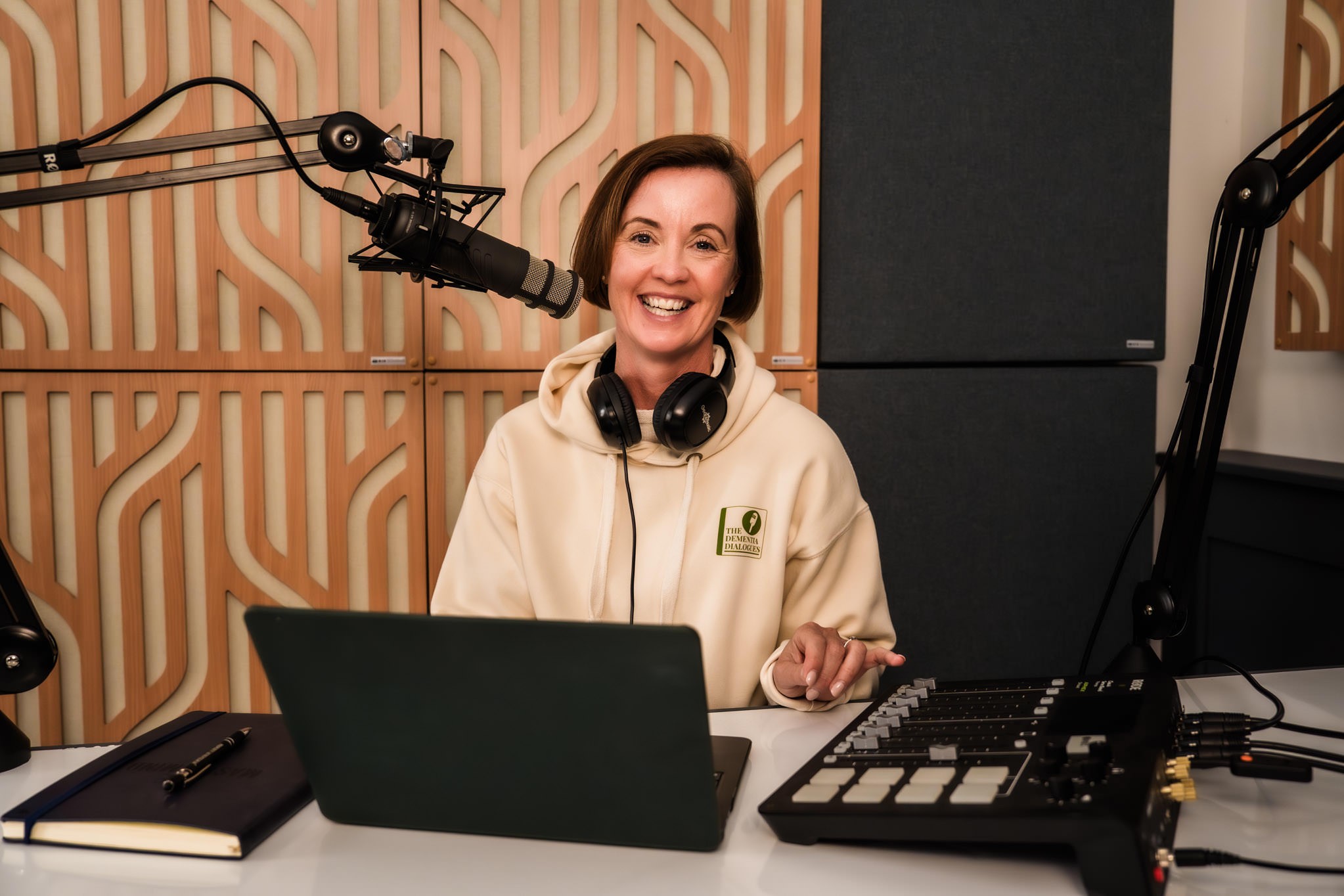
Natalie Carter is the founder and host of The Dementia Dialogues, a UK podcast sharing real stories to help families affected by dementia feel seen. In March this year she took the podcast on the road, recording a live episode at the Care & Dementia expo with Zoe Fry, Founder of The Outstanding Society.
Here, she reflects on the support that has made the biggest difference to the people she has interviewed, including those living with dementia and their carers.
When I started The Dementia Dialogues, I did it because my Nana had dementia and my family often felt lost, unsupported and unsure where to turn. Nearly two years and well over eighty episodes later, I have spoken with people living with dementia, family carers, researchers, therapists and care professionals from across the country. If there is one thing those conversations have taught me, it is this: the support that helps people the most is rarely the most clinical. It is the support that helps a person feel like themselves again.
I am asked often which therapy works best. The honest answer is that there is no single winner. What comes up time and again is that wellbeing improves when we stop trying to fix the person and start trying to reach them. Here are the approaches my guests and listeners return to most.
Music. Almost every conversation touches on it. I have heard from music therapists and families alike that a familiar song can reach someone when words no longer can. People who seem distant will suddenly sing every word of a tune from their youth, or tap along, or simply soften and settle. Music does not rely on memory in the way conversation does, and that is exactly why it reaches people so reliably.
Reminiscence and meaningful objects. One of my guests, Dr Kellyn Lee, introduced me to Material Citizenship, her project built around the idea that our belongings hold our identity. In her episode, The Blue Chair That Changed Everything (episode 30), she shows how a single familiar object can restore a person's sense of self. Photographs, old tools, a handbag, a favourite mug. These ordinary things anchor people to who they are, and carers tell me that honouring them eases distress far more than any new gadget.
Getting outside. When I have asked why the outdoors matters so much, the answers always come back to the basics. Fresh air, natural light and a reason to move all support sleep, mood and appetite. A walk, tending a plant or simply sitting in the sun costs nothing, asks little and is available to almost everyone. Time and again, families tell me that the days spent outdoors are the calmer ones.
Connection through everyday moments. Some of the most powerful support is not a therapy at all. It is a dementia friendly barber who makes a man feel dignified and cared for in a chair he has sat in all his life. It is theatre and movement that connect two people without needing a single word. It is laughter, which more than one guest has described as the thing that kept them going. These moments remind people that they are still here, still valued and still part of things.
Belonging matters just as much as any single therapy. Peer support groups, young onset networks and community projects give people living with dementia somewhere to go, something to look forward to and the company of others who understand. For many of my guests, finding their community was the turning point.
Support for the people doing the caring. We cannot talk about wellbeing for someone living with dementia without talking about the family around them. Admiral Nurses, respite and a listening ear come up again and again as lifelines. When a carer is rested and supported, the person they care for feels it too. Wellbeing is shared, and it flows both ways.
Final takeaway
If I could offer one takeaway to fellow professionals and to families, it would be to look past the diagnosis and towards the person. Ask what they love, what soothes them and what makes them laugh, then build from there. The most effective support I have come across is not expensive or complicated. It is a familiar song, a treasured chair, a walk in the garden, a good haircut and someone who takes the time to notice.
That is what my guests have taught me, and it is the reason I keep having these conversations. People living with dementia are not lost to us. With the right support, there is still so much life, connection and joy to be found. You can find these conversations, and many more, on The Dementia Dialogues wherever you listen to podcasts.