
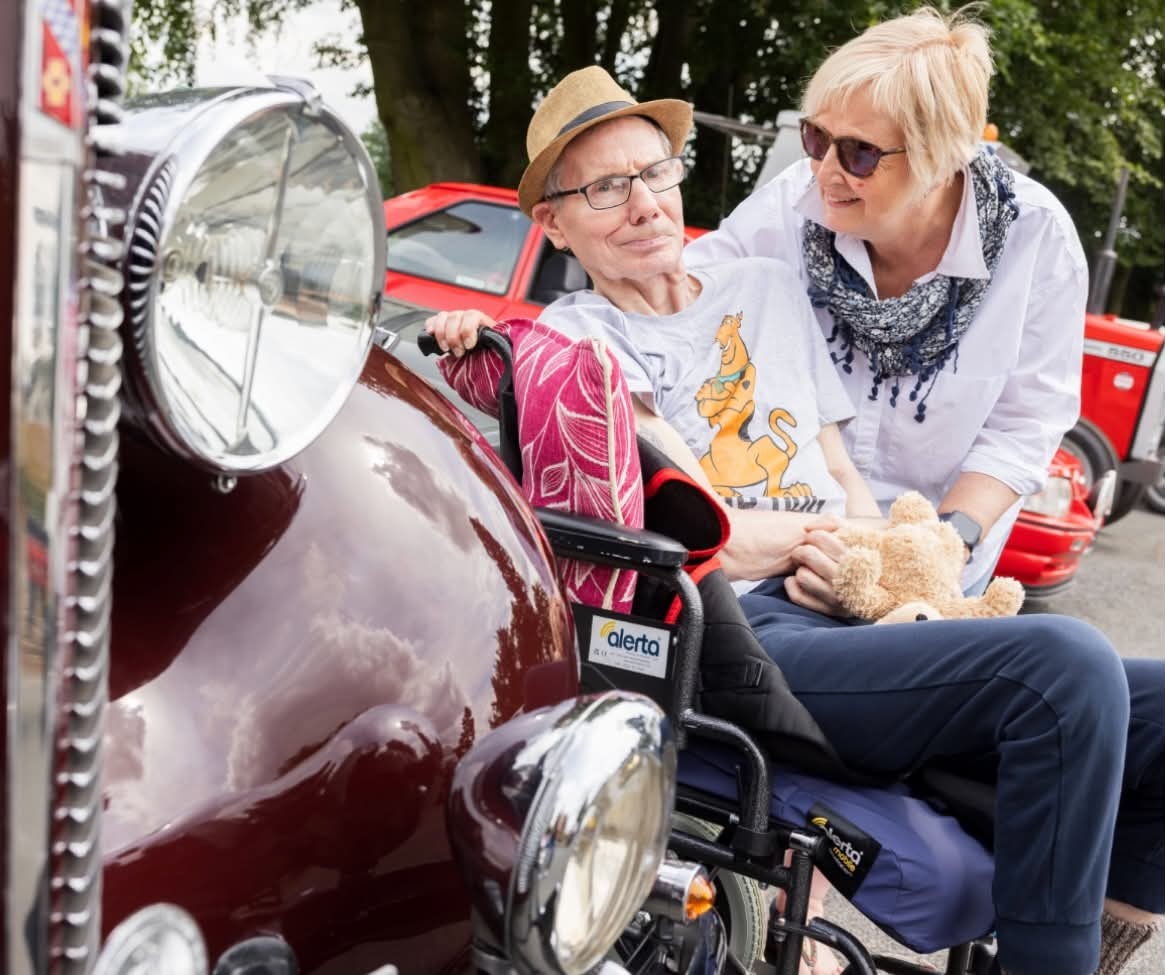
When Wendy Burton’s husband Ian was diagnosed with Frontotemporal Dementia in December 2014, the couple had no idea how to navigate the care system or where to turn to for support.
Since then, she has become an expert by experience and channelled her energy into not only being a carer but working to ensure other families don’t have to face an uncertain future alone.
She became a service adviser for dementia charity Making Space in Derby and, since Ian moved into a care home 10 years ago, has been relentless in her drive to raise awareness about rare forms of dementia, chairing the Rare Dementias Group and producing a podcast on young onset dementia.
Now, reflecting on her own experiences, Wendy shares her advice on the crucial initial steps families should take after a dementia diagnosis, in the hope that it will set them on the right path and make those early days feel less overwhelming.
Contact your local support service
My first piece of advice would be to contact your local dementia support service, which is likely to be Alzheimer's Society or Age UK. They will be able to provide you with some invaluable information. While much of this advice may not feel relevant immediately following a diagnosis, keep it somewhere safe so you can refer back to it when the time is right.
Next, reach out to your local authority to request a care assessment. This process identifies the level of formal care and support your loved one may require, while giving you the opportunity to share the specific types of support you would like to receive.
Legalities
Sorting out your legal affairs can feel overwhelming, but getting the right plans in place also brings peace of mind. It clears the way for you to focus on what matters most: enjoying life, protecting your wishes, and making lasting memories with the people you love.
Here’s my top tips on legal planning:
Apply for Lasting Power of Attorney (LPA): Register both Health & Welfare and Property & Financial Affairs LPAs through the Office of the Public Guardian.
Write or Update Wills: Ensure legally binding wills are in place to explicitly reflect current wishes.
Sever the Joint Tenancy: Consider changing homeownership from Joint Tenants to Tenants in Common. This means that the property ownership will be split in half and protects the whole of the property being used to cover care costs, should a care home be required at a later date.
Notify the DVLA and Car Insurer: Inform both parties of the diagnosis. This does not automatically mean losing a driving license, though annual assessments may be required.
Finance
Just like legal planning, arranging your financial affairs is rarely a pleasant experience, but taking the time to do it now can help ensure you receive the support you’re entitled to and ease the burden on your family.
Check benefit eligibility:
- Personal Independence Payment (PIP): For individuals under State Pension age.
- Attendance Allowance: For individuals at or above State Pension age.
- Employment and Support Allowance (ESA): If you are unable to work due to illness or disability.
- Carer’s Allowance: If you provide care for someone with substantial needs.
Get help with application forms: Reach out to your local council’s Money Advice Service, Age UK, or Citizens Advice for free assistance with completing these forms.
Explore further savings and discounts:
- Council Tax Discount: Once PIP or Attendance Allowance is awarded, you may qualify for a 25% Council Tax discount. If you live alone, you may be completely exempt.
- Blue Badge: Apply through your local council to access accessible parking options.
- Concessionary Bus Pass: If you are disabled or meet age requirements, apply via your local council for free local bus travel.
Social interaction
Once you have your affairs in order, it’s important to continue living enjoying life – it is possible, even after a dementia diagnosis!
My advice would be to seek out support groups in your local area and attend as many as you can to avoid becoming isolated. Attending groups will allow you to meet other people affected by dementia and understand your situation – there’s no better support than peer support.
Health professionals also regularly attend these groups and will be able to connect you to relevant services, specialists and resources.
Other Useful Contacts
- Dementia UK – This charity employs Admiral Nurses who are specialists in dementia care.
- TIDE (Together in Dementia Every Day) – A charity that supports and connects unpaid carers. They hold online meetings including a Young Onset Group for under 65s.
- Young Dementia Network – An online community supporting those affected by young onset dementia.
- Dementia Carers Count – A small charity supporting and advocating for dementia carers.
- Rare Dementia Support - Specialist social, emotional and practical support services for people affected by a rare form of dementia.
- Lewy Bodies Association – The only UK charity dedicated exclusively to Lewy body dementia.