
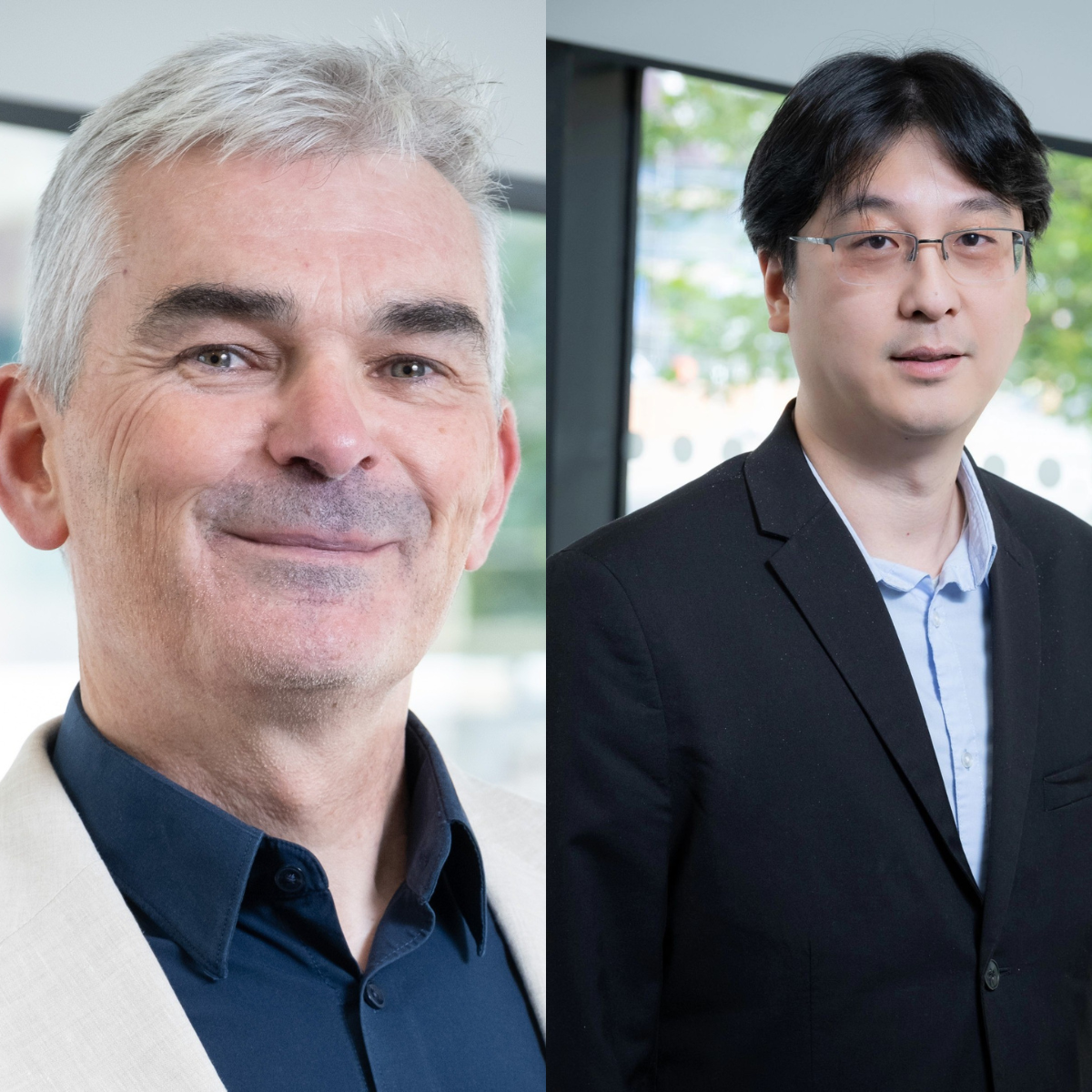
By Andy Kerr, Reader in Biomedical Engineering at the University of Strathclyde & Sintip Pattankuhar, Strathclyde Chancellor’s Fellow and Rehabilitation Physician.
Rehabilitation improves recovery after stroke. This is obviously not news. But what is important, and now backed by large, high‑quality studies, is that we can say this with far more confidence than ever before. We also know rehabilitation is cost-effective. Despite this, providing timely, equitable access to high‑quality rehabilitation remains a major challenge for health services in the UK and worldwide. Patients want it, clinicians believe in it, and the evidence supports it, yet delivering it optimally feels unachievable.
One finding that has become increasingly clear is the dose-response relationship: the more rehabilitation a person receives, the better their outcome. Therapists and patients have known this for years, of course, but we now have robust evidence confirming that higher-intensity rehabilitation leads to better outcomes. This is why the National Institute for Health and Care Excellence (NICE) now recommends at least three hours per day of multidisciplinary stroke rehabilitation. For context, that’s roughly four times the previous recommended dose, an enormous shift in expectation for patients, therapists, service providers and funders. Unsurprisingly, it intensifies the challenge of delivering rehabilitation at scale. But it is also sparking innovation, including our own work with Technology‑Enriched Rehabilitation Gyms (TERG).
Increasing therapy intensity, whether through new workforce models, redesigned services or technology, will only work if it is done fairly and if it adapts to the individual needs of each patient. After all, no two strokes are the same and no two recovery journeys are the same. NICE explicitly recognises this and recommends tailoring rehabilitation to each person’s goals and abilities. They also note that rehabilitation should “continue for as long as it continues to help achieve goals”. In other words: one size does not fit all and never has.
Ideally, a team of skilled therapists - occupational therapists, physiotherapists and speech and language therapists - work with each patient to assess their needs, set meaningful goals, and use their training and experience to design a programme that specifies duration, frequency and intensity. Equally important is regularly reviewing and adjusting this plan so that rehabilitation always matches where the patient is in their recovery. But this dream scenario depends on long-term, reliable access to therapists and sufficient staffing to deliver the right dose, both of which seem unachievable for UK services. The uncomfortable reality is that current post‑stroke rehabilitation provision falls short of what we know works best.
That gap between what should happen and what can happen is exactly where technology and good measurement may help. Building on the success of our TERG work, our group has been exploring how technology could support genuinely personalised rehabilitation, especially in motor recovery. Several promising approaches are emerging:
1. Biomechanics
Wearable devices: pressure insoles, accelerometers, gyroscopes and more can now capture detailed information about how people move. These tools can measure intensity (like daily step count) and quality (symmetry, smoothness, coordination). Many have been tested for accuracy, and some are already integrated into games or feedback systems to make participation more engaging. This kind of data helps set targets and shape content: movement patterns, speed, variability and even components of functional tasks. Robots and VR systems increasingly use these measures to personalise the training they deliver.
2. Physiology
Everyday wearables can monitor heart rate, oxygen saturation and other cardiopulmonary markers. These data points can help set safe and appropriate intensity levels, and they allow patients and clinicians to understand how the body is responding to therapy in real time.
3. Neurophysiology
Electromyography (EMG) has been around for decades, but it remains under‑used in rehabilitation. EMG shows which muscles are activating, when and by how much - information that can guide interventions such as functional electrical stimulation (FES) or orthotic support. Newer approaches, like functional near‑infrared spectroscopy (fNIRS), allow us to observe changes in cortical activation during movement. This may sound futuristic, but systems like these are already being used during gait training to adjust therapy parameters in real time. Understanding which interventions drive positive neural changes could also help clinicians select the right “priming” therapies, such as mirror therapy or aerobic warm‑ups.
4. Blood biomarkers
Finger‑prick tests are widely used for monitoring general health, inflammation and cardiovascular risk. Looking ahead, we may also be able to use them to track metabolic stress or even neuroplastic responses to rehab, opening new possibilities for personalised rehabilitation.
A glimpse of the future
Imagine a stroke survivor preparing for a daily therapy session, at home or in a local community facility. They put on a lightweight headset, and a friendly interface pops up on a laptop, smartwatch, or maybe even a hologram. The system asks them to perform a few simple movements. Sensors woven into their clothing measure performance and compare it to previous sessions. The headset’s imaging tools track changes in brain activation. An AI system processes all of this and adjusts their personalised training programme accordingly. The patient chooses from a menu of options, perhaps a game, some music or a familiar task. Throughout the session, heart rate, blood pressure and movement repetitions are quietly monitored. At the end, a quick finger‑prick blood test provides additional information about recovery and overall health.
It’s a vision that blends neurotechnologies, biomechanics and clinical science with everyday practicality. But it also raises questions: will technology reduce the human touch? How do we ensure people feel motivated, supported and listened to? What ethical or professional safeguards do we need? Is this approach actually more efficient, democratic and critically effective than what we currently have?
These are exciting conversations, and we would love to explore them with researchers, clinicians and, most importantly, people living with stroke and their families.
To get in touch, contact us at:
Andy Kerr:
Sintip Pattanakuhar:
Andy Kery will give a talk on innovation in rehabilitation at the Neuro Keynote theatre during Naidex on March 25.