
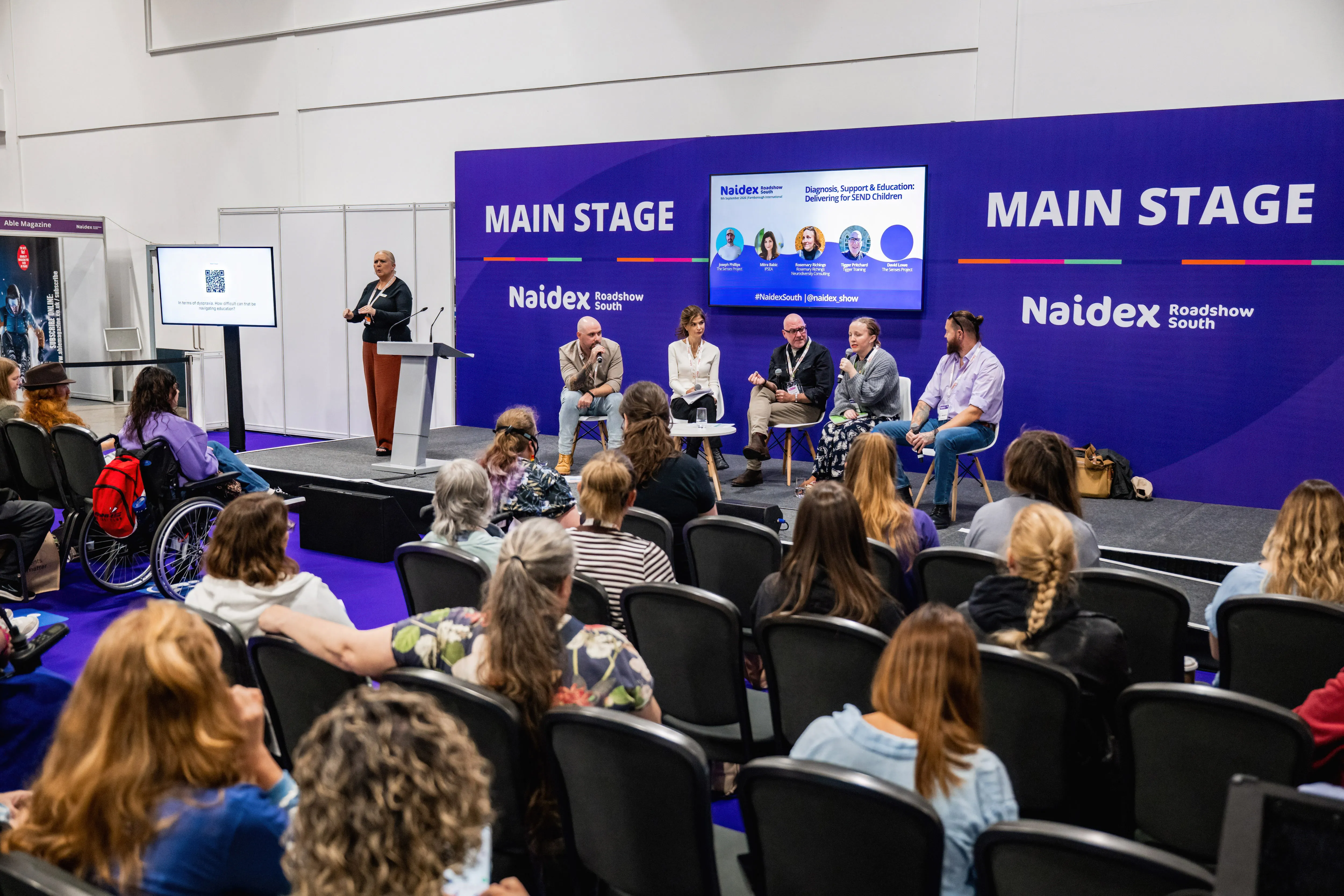
A leading panel of neurodiversity and SEND advocates has stressed the importance of formal diagnosis in unlocking children’s potential in today’s climate.
Speaking at Naidex Roadshow South on September 9, the panel explained that in an era marked by resource scarcity and institutional gatekeeping, a formal diagnosis often translates a child’s struggles into actionable, legally mandated support.
Tigger Pritchard, a neurodivergent advocate and trainer who helps organisations and communities become more inclusive, said: “I’m personally not fond of diagnosis because it’s pathologizing, but in today’s present climate we do need it.
“You need it for funding, you need it for legal understanding, and you also need it because it opens doors for professionals and for family members.”
There’s a growing narrative suggesting that children are being “over-labelled” as autistic or ADHD, with some researchers suggesting that diagnoses are unnecessary or used as excuses for behaviour.
But the Naidex panel emphasised that professional identification is vital for helping children and young people understand their needs and form healthy identities.
Rosemary Richings, author and consultant specialising in disability and neurodiversity, shared her experience of being diagnosed with dyspraxia at the age of four.
“It was the most wonderful privilege of my life. It was key to going through the school system and the workplace and it gave me something I could point to that gave answers,” she said.
“I was able to go on that journey quite early in order to figure out what that diagnosis looked like for me and how it affects my identity.”
Tigger, who was professionally identified as autistic and ADHD last year, added: “After four to five years of self‑identifying, I must confess, having that little bit of paper has made me feel differently.
“I do realise that in this climate you need that bit of paper so families and individuals can go on a journey of understanding what it means for them.”
David Lowe, co-founder of The Senses Project, which offers supportive mentoring to help neurodiverse people achieve independence, expressed that formal diagnoses not only help children understand their own needs, but also equip teachers to create better learning environments.
He said: “Compared to when I was at school, there’s now a much greater understanding that the way everyone learns is so fantastically different, so I think having that giant scope helps [teachers] recognise those key differences and enable children to smash those learnings together.”
Mitra Babic, a non-practising solicitor and member of the legal team at IPSEA (Independent Provider of Special Education Advice, also agreed that neurodivergent diagnosis can be helpful in understanding children’s needs.
However, she stressed that a diagnosis is not required to receive SEND support in schools.
“Parents often worry that if they don’t have a diagnosis then they won’t be entitled to any kind of SEND support and that is not the case,” she explained.
“The Children and Families Act that covers SEND support and EHC plans, and the Equality Act 2010 that covers reasonable adjustments does not require a diagnosis.”