
When George Rook was diagnosed with Vascular Dementia and Alzheimer’s in 2014, he was told to get his affairs in order and prepare for the worst. But instead of standing still and believing that his life was over, he threw himself into helping others with dementia, lobbying for greater pre- and post-diagnosis support and raising awareness about what it’s truly like to live with the condition.
Twelve years on, having ignored that initial advice, George tells The Care Social’s Sarah Clarke about how he continues to live a full life with meaning and purpose.
Could you tell me about your life before your diagnosis?
When I left school, I trained as a Chartered Accountant in Birmingham, but I didn’t enjoy that at all. So, I went to York University to study English because that’s what I was really interested in. After that, I became an English teacher for 11- to 16-year-olds here in Shropshire. I did that for about 15 years and then, unfortunately, I suffered a breakdown due to burnout.
I took a break from teaching and went back into schools as a School Business Manager. I worked in that role until 2008, when my dementia was beginning to develop. I was experiencing symptoms including confusion, difficulty multi-tasking and word-finding problems. I did work part-time for the British Red Cross in Shrewsbury for a while, managing the health and care services that they offer, but after I got my diagnosis of Alzheimer’s and Vascular Dementia at the age of 62, I retired from paid work.
What was the journey to diagnosis like for you?
When I started experiencing symptoms, I asked my GP to refer me for an assessment, but he said there was no point in doing that because nothing would change. He basically told me, in not so many words, that there’s no cure for dementia, so why bother?
After two years and two failed attempts at getting a referral, I went back to the GP and took my wife along with me. We insisted that he refer me and he finally did.
I was assessed and they did a brain scan and a bank of cognitive tests and confirmed that it was dementia. I remember a community sister, who dealt with all the Young Onset Dementia cases, came along and basically said “don’t get tired, don’t take risks and get your affairs in order”. That was her advice to me.
How did that experience make you feel?
Well, I haven't listened to her advice. I mean, I don't take stupid risks but, equally, I don't refuse to cross a road just because I might forget that there’s a car coming. In terms of the diagnosis, I was rather expecting it. I had a coronary bypass when I was 50, so the Vascular Dementia diagnosis made sense.
The Alzheimer’s diagnosis took me by surprise though, but I wasn’t particularly disturbed by it. In fact, this diagnosis meant that I was prescribed a drug called Donepezil, and that made a big difference. Within 48 hours of taking it, I felt as though my brain had sped up. For me, that was a clear sign that something could be done, despite what my GP told me.
What kind of support, if any, were you able to access in your community? And do you have close family members who have been able to support you?
I have a wife and three adult children who are in their late 30s and early 40s. One is a nurse, one is a consultant anesthetist and the other is a beekeeper. We don’t talk a lot about my dementia, but they observe and they respect that I can do things. I still have bad days, but I’m still functioning pretty well.
In terms of local groups, soon after my diagnosis, I found the DEEP network – the Dementia Engagement and Empowerment project. Unfortunately, it’s no longer funded, but there are still around 60 to 70 DEEP groups across the country, often run by people with dementia, for people with dementia.
I actually started a local group in Shropshire. Ten men and one woman came along, and I was staggered by how many of them hadn’t talked to anyone about their diagnosis. I facilitated the Good Life with Dementia Course with them – a six to seven-week course where people with dementia can talk about their experiences and support each other to live as well as they can.
The course was devised by a DEEP group in York, together with the late, great [dementia activist] Wendy Mitchell and a guy called Damian Murphy, who is the Director of Innovations in Dementia at the university. It’s a really successful model and, in my opinion, it should be offered to everyone who is newly diagnosed in the UK. In fact, York University is currently trying to establish evidence to prove its effectiveness in other parts of the country so that it can sell the course to commissioners.
You’ve spent a number of years raising awareness about living with dementia. Could you tell me more about your advocacy work and what inspired you to begin this journey?
I decided quite soon after my diagnosis that I would channel my energy into volunteer work and raising awareness about dementia. I wanted to improve the way people like me are treated and supported through both health and social care services and society generally.
I’ve spoken at conferences and I write about a blog about what it’s really like to live with dementia. I’m also a member of the Memory Services National Accreditation Project, or MSNAP for short. This is run from the Royal College of Psychiatrists, and it works to support local service improvement, focusing on assessment and diagnosis of dementia.
I’ve also chaired a steering group for people living with dementia in Shropshire and Telford. This ran for eight years and comprised healthcare professionals, volunteers, people with dementia and their carers. Together, we devised a model for what we believe should be delivered to support local people affected by dementia. The Integrated Care Board (ICB) said they would hire someone on a part-time basis to implement our recommendations, but the only element that they introduced was our four Admiral Nurses, funded by GPs through their Primary Care Networks. That was a great start, but it’s not nearly enough. One of our other requests was for the ICB to fund Dementia Navigators – professionals who work with individuals and their families to provide information, support and signposting. That never happened and, unfortunately, I feel that the ICB has now given up on dementia entirely. They don’t even reply to my emails.
In my experience, Shropshire is pretty poorly funded in terms of community and health services and that’s a big problem. When it comes to dementia in particular, commissioners and even health professionals often place it in the “too difficult” pile because there is no cure for it, so they choose to ignore it.
Is there hope for a better future for people living with dementia?
There is a silver lining on the horizon and that is the Modern Service Framework. The DHSC is committed to developing a series of guidelines for the services that should be delivered for people with a diagnosis of dementia, in terms of pre-assessment and post-assessment support. This should be published by early next year, I’d imagine. There’s lots of people, including myself, who have been involved in drawing this together. There is a danger that people in Whitehall will sit around a table and decide to opt for the easiest solutions, so we don’t know what will come out of it. But there’s a lot of work being done to back up what we’re asking for. What we need is for these standards to be mandatory.
What do you make of Andy Burnham’s pledge to fix the social care system?
I've heard and watched Andy Burnham speak in person, like at UK Congress, and he is incredibly personable and motivated. He knows a lot about dementia, having a father living with the condition. Whether he can translate his ambitions into funding to make the change, we'll have to wait and see.
How do you live well with dementia and what makes the biggest difference to you, day to day?
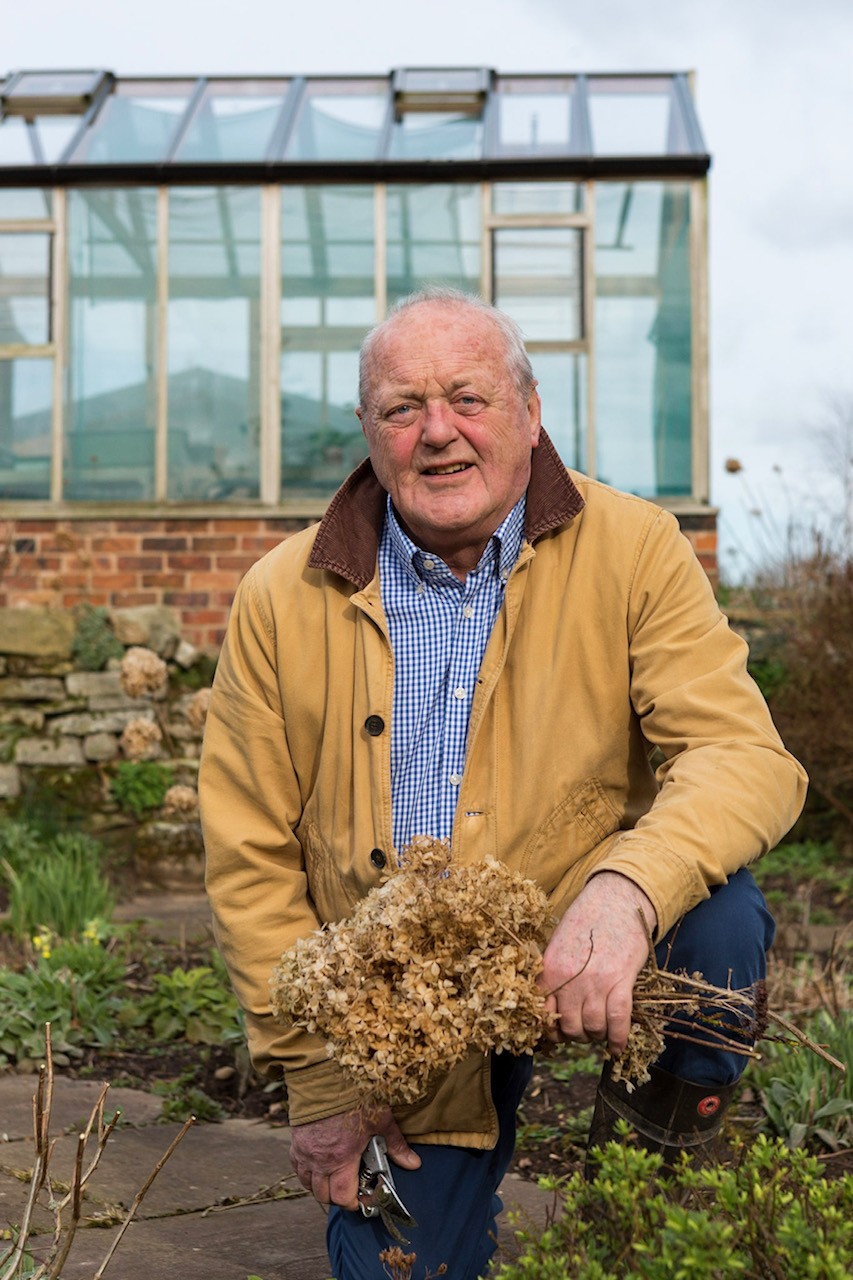
Raising awareness gives me a lot of purpose, but aside from that I just enjoy living in the countryside. I love nature. I’ve actually created a bit of a nature reserve in a field behind our house. I’ve been here 43 years, and I’ve just planted and planted. It’s my happy place.
Is there anything that you know now that you wish you’d known when you were first diagnosed?
I wish I'd been told about the value of peer support. And by peer support I mean other people with dementia who I can identify with. What was actually suggested was that I attend a group in Telford, which turned out to be a group for people in their 80s who had very advanced dementia and were unable to hold a conversation. I attended one session and I had to leave after 10 minutes because that was a vision of, God forbid, what my symptoms will look like in the future. So that was a poor recommendation.
What I will say is that people who have been newly diagnosed with dementia should never be told that their life is over. Health professionals should instead encourage them to get out there, talk to people, remain socially engaged, keep active and, most of all, keep living, because with the right support, you may well find yourself living a better, more fulfilled life than before.