
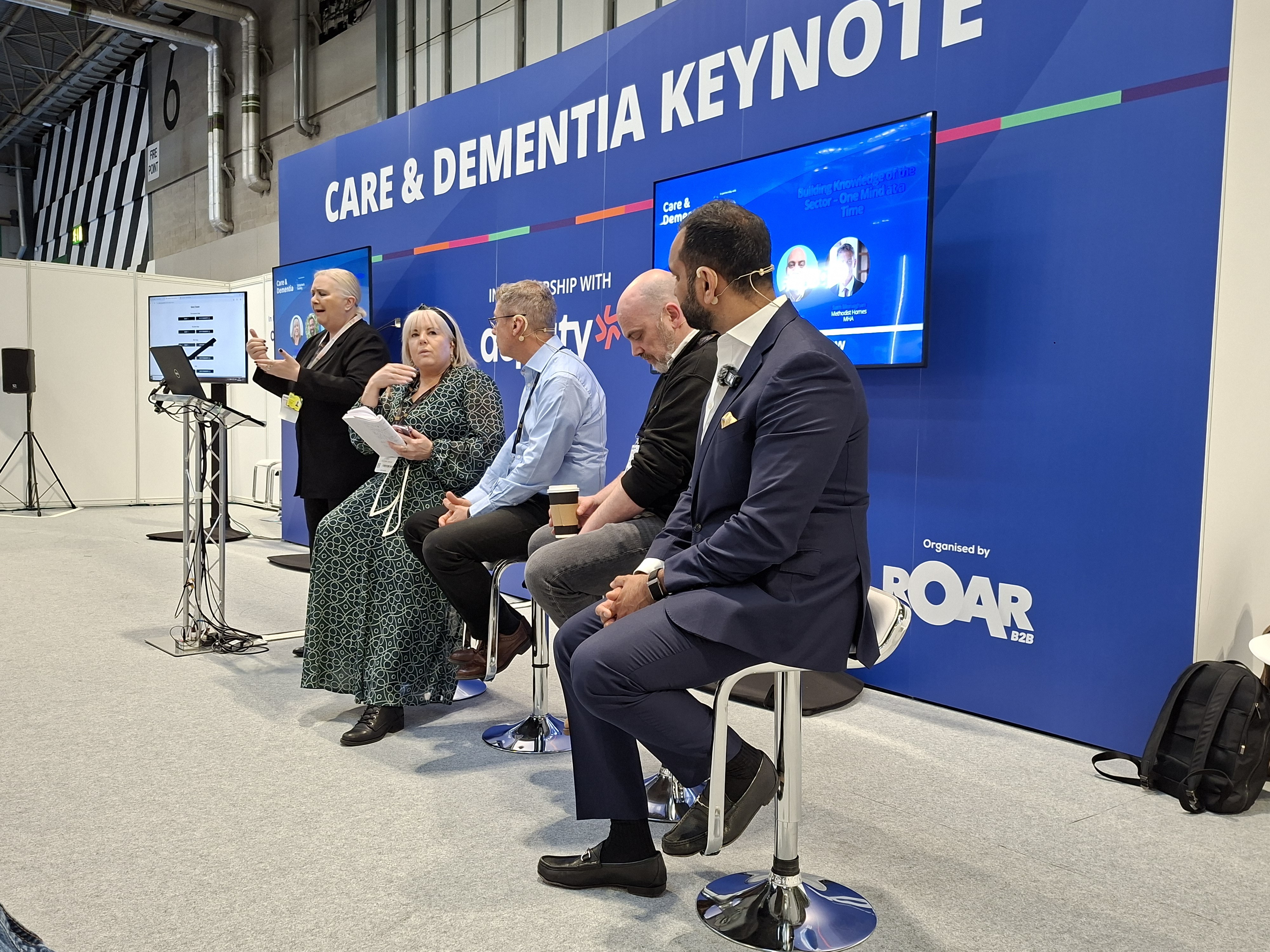
One of our most well-attended sessions at Care & Dementia brought together leaders in care to explore the practical steps for building a positive workplace culture and nurturing a confident, skilled workforce.
Below are some of the ideas they shared, from coaching‑style leadership and emotional‑intelligence recruitment to personalised gestures and large‑scale recognition events.
When care organisations get it right, they said, colleagues feel safe, supported and inspired, and residents and service users feel the benefit every day.
On the panel:
Samantha Crawley, CEO, EQ Care Group
Amrit Dhaliwal, CEO, Walfinch
Sam Monaghan, CEO, Methodist Homes MHA
Know your ‘why’
Our panellists emphasised the importance of care providers knowing their ‘why’ – what they stand for, what are their values and why they choose to deliver care every day.
This, they say, will help organisations lay the foundations for the culture they wish to create.
“We have developed our MHA Behaviours, which capture our values, our ethos, ways of working and the principles we seek to underline,” Sam shared.
Samantha added that “owning your culture” is essential to establishing your identity and ensuring long-term success.
Attract the right people
Once you establish your core values, it is important to recruit the right people, whether it’s a franchise owner, registered manager or care worker, who share those values.
Our panellists said they are continuously thinking about the type of people they want to take on their journey with them, and what is their personal ‘why?’.
“When it comes to potential franchise owners joining the network, it’s important to establish whether their ‘why’ is because they want to be an entrepreneur and earn lots of money or because they have a greater purpose,” Amrit said.
Samantha shared that the EQ Care Group assesses people’s emotional intelligence – essential in a caring role - before interviewing them.
“During the induction, we ask people to attend our assessment centres. They are told to bring something that matters to their heart and present this to the room,” she explained.
Nurturing the workforce
Our panel also stressed the need for strong leadership to be replicated throughout an organisation, helping to align teams and drive collective action toward common goals.
MHA’s “Engaging Leaders Programme” is built around culturing a coaching style of leadership. During this programme, leaders are first taught to look after their personal wellbeing and encourage their team members to do the same.
As Sam explained, “If you don’t nurture the workforce, they’re not going to nurture our residents.”
This approach involves:
- Empowering team leaders to make decisions
- Using mediation instead of grievance processes
- Engaging with colleagues through multiple channels
- Humanising leadership messages to build trust
- Modelling kindness and empathy
- Creating safe environments for colleagues to unwind
Flipping the hierarchy pyramid
Samantha described her organisation’s “upside‑down pyramid”, where care professionals sit at the top. She said: “As CEO, if I don’t show up, no one really cares. But if the care team doesn’t show up, everyone cares.”
Her role, she said, is to ensure the wellbeing of the team, because only then can they deliver the best possible care.
“We often skip over that and say, ‘we’re here to make residents’ days the best’ but if we’re not making our team members’ days the best, our residents’ days won’t be the best.”
Samantha also stressed the importance of taking care of long-serving colleagues who do not wish to climb the ranks into leadership roles.
“There’s many people in our homes who don’t want to do anything more than their current role – and they love what they do,” she said. “For me, keeping hold of those people is key because if we lose them, we lose the heart of the organisation.”
Small gestures, big impact
Amrit explained that building a positive workplace culture also relies on personal touches in recruitment and retention. Something as simple as reserving a parking space for an interviewee can dramatically reduce no‑shows and make candidates feel valued.
“What is it you drink – coffee, green tea?” he asks candidates ahead of an interview, demonstrating how small acts of thoughtfulness can set the tone for a supportive culture.
Scaling this across 40 sites requires clear processes, training and tools, he said, but the principle remains the same: treat every care worker as an individual.
Employee recognition
Finally, our panel explained that recognising excellence within a care organisation is essential for motivating teams and nurturing a confident workforce.
Sam said: “We have recognition within our homes, so managers spend time every month shining a spotlight on deserving individuals. We also hold our annual Oscars ceremony where we celebrate our care home managers and their entire teams. We had 560 nominations from colleagues last year.
“It’s all about keeping alive the momentum of the organisation and facilitating a sense of belonging.”