
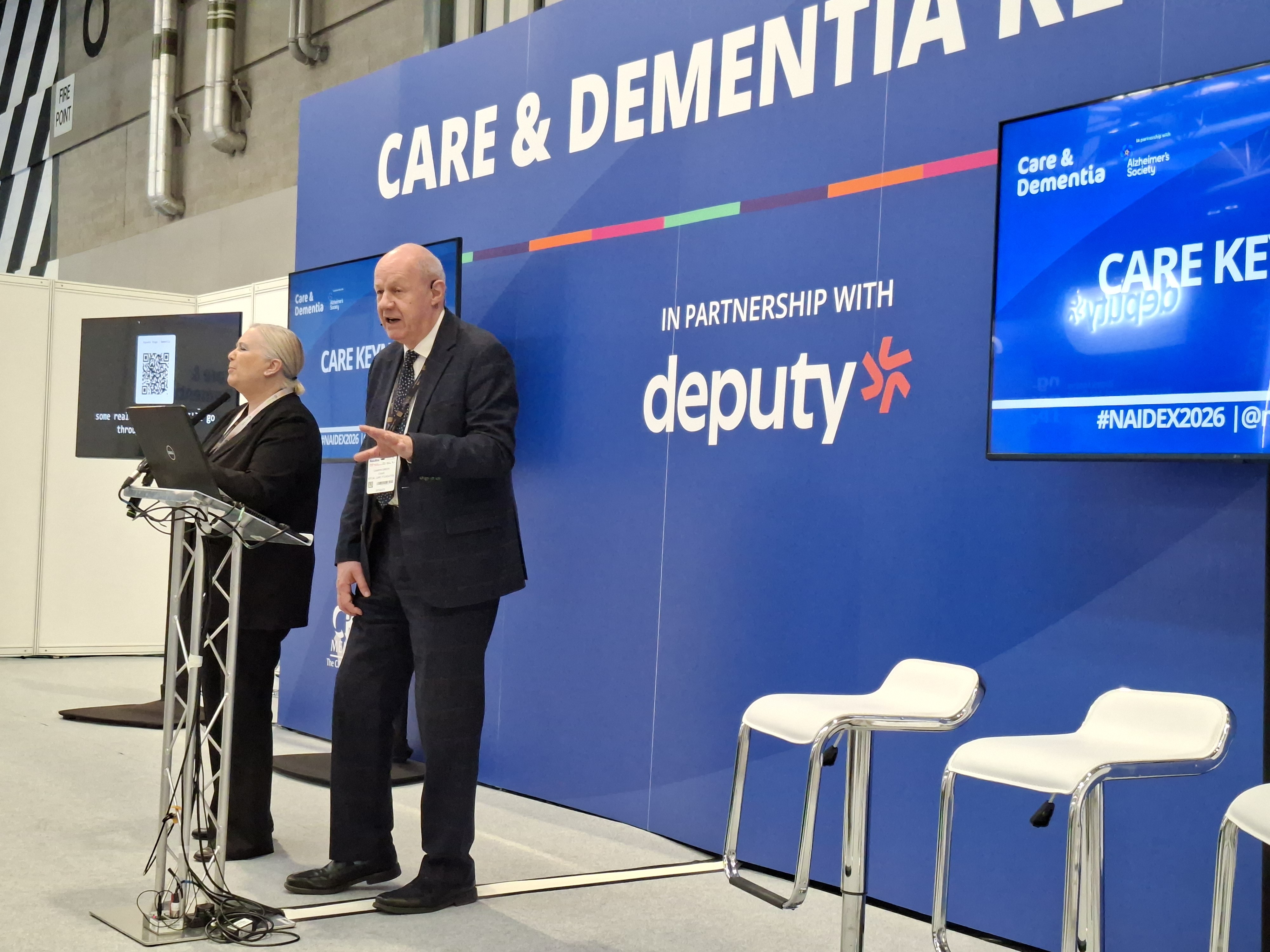
Former Deputy PM Damian Green has expressed cautious optimism about the forthcoming Casey Commission report despite the long history of social care being “kicked into the long grass” by successive governments.
Speaking at Care & Dementia last month, Damian, who was appointed Chair of the Social Care Foundation in 2025, said: “I’m slightly optimistic. Louise Casey is both thoughtful and forceful, and I believe she will recognise that any successful reform needs cross-party buy-in to avoid the political horrors we’ve seen [in the past]”.
The Casey Commission, announced by the Government in July 2025, is examining the deep‑rooted issues affecting the social care system and exploring how to create a more sustainable model for the future. An interim report is expected to be published later this year, with a full report scheduled for 2028.
Its creation follows several attempts by governments of varying political leanings to address the increasing challenges facing the sector.
“I believe there have been 22 attempts to analyse what needs to be done since Tony Blair first said in the early 1990s that social care is a big issue that the next Labour government would have to address,” Damian explained during his conference session.
He said one commission, the Dilnot Report, set up under the Cameron coalition government, “did have some impact”, with some recommendations resulting in the 2014 Care Act.
However, one of the key findings, about how to protect savings and wealth for those needing care, was never implemented, after the Treasury deemed it too expensive.
“The Dilnot solution was a cap on how much individuals have to pay for their care. That’s when the Treasury killed it because that cap would mean there’s a gap to be filled by taxpayers. Sadly, this recommendation remains killed to this day, leaving the sector seriously underfunded,” Damian explained.
The former MP said Baroness Casey’s biggest challenge will be not only to produce recommendations that align with people’s “moral political viewpoints”, but also to ensure they “survive contact with the Treasury, whoever is in power after the next election”.
Damian stressed that while this will not be an easy task, particularly with five parties competing in the May elections, it remains vitally important.
“Social care is a key public service provided by a dedicated workforce. As providers, we all need the sector to be put on a stable footing, and many of the most vulnerable people in our society depend on it for their dignity. That, in the end, is what this is all about and why this is so important,” he concluded.