
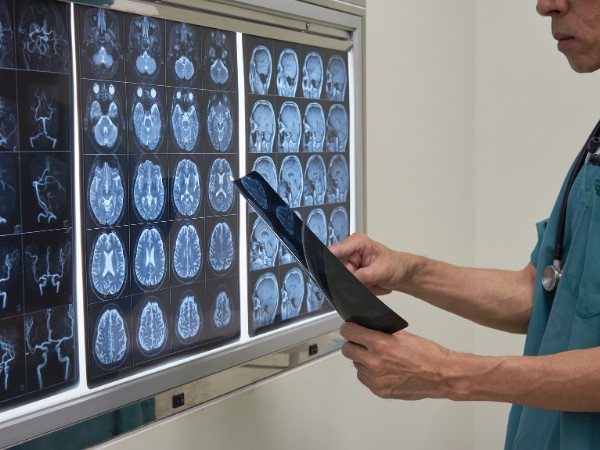
A once-daily blood pressure tablet reduced the risk of a stroke by nearly 40% in patients who had already suffered a brain bleed, a global study has found.
The TRIDENT study involved 1,670 patients who had experienced intracerebral haemorrhage and had high blood pressure, one of the biggest risk factors for another stroke.
Professor Jeyaraj Pandian, President of the World Stroke Organization, said: “TRIDENT is a major advance in showing the enormous benefits of effective blood pressure control after an intracerebral haemorrhage, and a simple and effective strategy in which this can be achieved, with relevance to patients all over the world.”
During the trial, patients received GMRx2, a single pill combination containing telmisartan, amlodipine, and indapamide, or a placebo, alongside standard care.
After three years, stroke had occurred in just over 4% of patients receiving GMRx2 compared to 7% in the placebo group. This equated to a 39% lower risk of recurrent stroke.
Those taking the pill were also about a third less likely to have a major cardiovascular event, such as a heart attack or a death linked to heart disease.
Overall, the results showed one stroke was prevented for every 35 patients treated with GMRx2.
Professor Craig Anderson, Principal Investigator and Senior Professorial Fellow at The George Institute, which led the trial, said: “Lowering blood pressure is the only proven method to prevent another stroke, yet achieving good blood pressure control is a real challenge. One big issue is that the number and doses of antihypertensive medications are not increased when needed, and doctors and patients struggle with complex pill regimens.
“These findings could translate to important treatment benefits for the millions of people affected by intracerebral haemorrhage worldwide who face a high risk of having another one.”
Almost 17 million people worldwide have experienced intracerebral haemorrhage, and there are over 3 million new cases each year, according to the World Stroke Organization.
Among patients who survive this type of stroke, approximately one quarter will later die from recurrent stroke or cardiovascular disease.
Professor Pandian added: “We hope GMRx2 is approved for this indication by regulatory authorities throughout the world, and if so that it is widely used as an effective approach with the potential to improve the outcome for patients affected by intracerebral haemorrhage, and also ischaemic stroke, across the globe.”